
The Future of Programming: Will AI Replace Programmers?
AI can now generate code, write tests and find bugs in seconds. The evidence points not to the end of programming but to a shift in the developer's role towards architecture, judgement and business understanding.
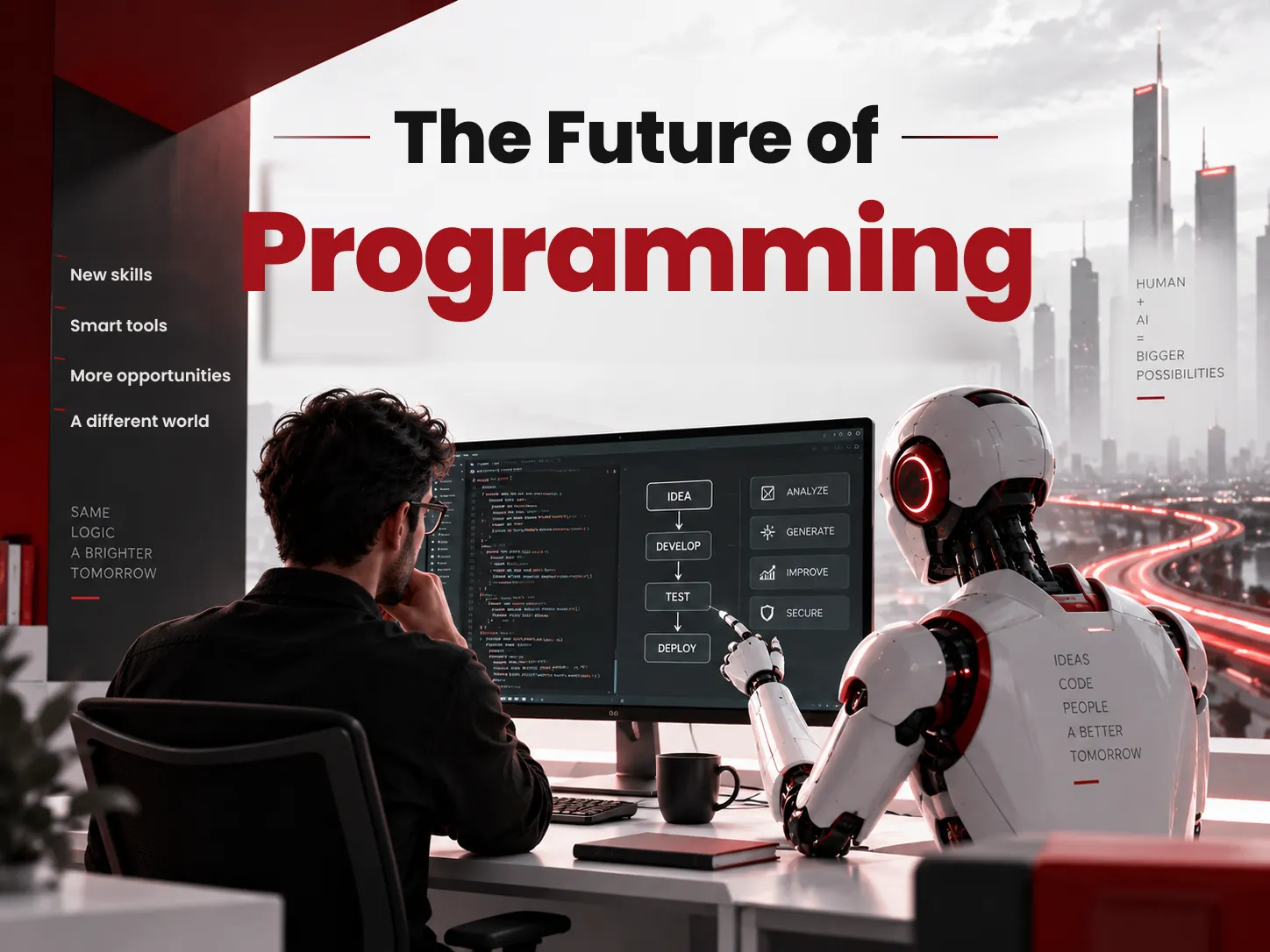
If AI can write code in minutes, why do we still need programmers?
Imagine a company director explaining to the technical team that they need a simple order management system. A few years ago, after analysing the requirements, a programmer would set up the project, design the database, write the API, build the user interface and test and fix the code over and over again.
Today, the same developer can describe part of the requirement to an AI tool and, moments later, receive the database structure, an initial API, tests and even part of the user interface. Work that might once have taken several hours can, in some scenarios, reach a usable starting point in a few minutes.
So the concern is not surprising: if these tools get better every year, what will be left of a programmer's job in five years' time?
The data shows that the change has already begun. In the 2025 Stack Overflow Developer Survey, 84 per cent of respondents said they use or plan to use AI tools in their development process, and 51 per cent of professional developers said they use such tools every day.
Yet the same figures reveal another important point: widespread use of AI does not mean complete trust in it.
And it is precisely this contradiction that offers an important clue to understanding the future of programming.
Where is the future of programming really heading?
Programming is not disappearing, but the definition of "programming" is changing.
In the past, a developer's value was largely measured by their ability to write code. Mastery of syntax, APIs and frameworks, and the ability to implement features quickly, mattered a great deal. These skills are still important, but AI is reducing part of their scarcity value.
Why? Because producing code has become cheaper and faster.
By contrast, skills such as working out what should be built, how the system should be designed, where the AI's output is wrong, which architecture will scale and what impact a technical decision will have on the business are becoming more important.
GitHub, in its analysis of software development trends, has also highlighted advanced developers moving away from a role as mere "code producers" towards roles based on directing, delegating and validating the work of AI.
Put simply, the future probably does not belong to the person who just codes faster; it belongs to the person who better understands what code should be produced, and why.
Will AI replace programmers?
This question does not have a black-and-white answer.
AI can replace some of programmers' tasks, but replacing tasks is different from eliminating an entire profession.
For example, generating repetitive code, building prototypes, writing tests, documentation, explaining code, simple refactoring and finding certain bugs are all tasks that AI can dramatically speed up.
But building real software is not just writing code.
Suppose a distribution company wants to build a bespoke sales management system. The main question is not how to build an order form in React or an API in Python. The real issue is how orders are recorded, how access levels should be defined, what rules govern pricing, how the system should connect to accounting, how customer data should be protected and how the architecture will behave if orders increase tenfold.
AI can help with implementing many of these parts, but first someone has to understand the problem properly and make the right decisions.
Even developers still treat AI output with caution. According to the 2025 Stack Overflow survey, around 46 per cent of developers distrusted the accuracy of AI tools' output, while 33 per cent trusted it. And 66 per cent cited one of the biggest problems as receiving answers that are "almost right" but not quite.
So the near future looks more like programmer + AI than "AI instead of programmers".
When AI writes the code, what will the programmer's job be?
Suppose a developer needs 500 lines of code to build a feature. If AI can generate 400 of them, has the developer's value fallen by 80 per cent?
Not necessarily.
The most important part of the work may be exactly those decisions that determine how those 500 lines should be written.
The programmer's role is gradually moving towards defining the problem, designing the architecture, giving the AI the right context, evaluating its output, debugging, security, testing and integrating systems.
In such an environment, the ability to spot faulty code may even be more important than the ability to produce that code quickly.
This is where the gap between a "coder" and a "software engineer" becomes more pronounced.
How does programming with AI differ from traditional programming?
In the traditional model, the programmer personally carried out most of the steps involved in turning a problem into code:
Requirement → Analysis → Design → Coding → Testing → Fixing
In the AI-assisted model, a new layer has entered this chain:
Requirement → Human analysis → Defining the problem for the AI → Generating a suggestion or code → Human evaluation → Testing → Fixing → Deployment
On the surface, the number of steps may have increased, but many of them can be done much faster.
The critical step, however, is "human evaluation".
If a programmer accepts generated code without understanding the principles of software engineering, higher speed may simply mean producing bugs, technical debt and security vulnerabilities faster.
So AI does not make programming knowledge irrelevant; in many serious projects, it actually increases the need for deeper understanding.
Which parts of programming will be most affected by AI?
The biggest changes will probably happen first in tasks that have a clear structure and are highly repeatable.
Generating boilerplate, simple CRUD operations, documentation, writing initial unit tests, converting code between languages, building queries, creating UI prototypes and finding simple bugs are among the tasks a significant share of which can be done with the help of AI.
But the further we move towards architectural decisions, security, sensitive systems, infrastructure, complex database design, performance optimisation and analysis of business requirements, the more important expert oversight becomes.
This can also be seen in developers' behaviour. In the Stack Overflow survey, developers showed more resistance to handing higher-responsibility tasks such as deployment and monitoring, or project planning, over to AI.
So the dividing line of the future will probably not be between "human work" and "AI work"; it will be between delegable work and decisions that require judgement.
Which skills will be worth more in the future of programming?
If more code is produced by machines, a programmer's competitive edge will shift from memorising syntax to the ability to solve problems.
Understanding software architecture, system design, databases, APIs, security, cloud, DevOps, testing and debugging will remain valuable. Alongside these, the ability to work effectively with AI models and AI agents is becoming part of every developer's toolkit.
But one less technical skill is also becoming very important: understanding the business.
A programmer who only asks "what should I code?" does not create the same value as one who asks "which business problem is this feature meant to solve?"
This also matters in the projects Zonan System analyses and delivers for businesses: the starting point for a good system is not choosing a programming language, but understanding the process and the problem the software needs to solve.
And this is one of the skills that will probably become even more valuable as AI grows more powerful.
What will happen to programming languages?
The rise of AI does not mean programming languages are becoming irrelevant.
In fact, GitHub's data shows that the language ecosystem remains very dynamic. In August 2025, TypeScript overtook Python and JavaScript to become the most used language on GitHub. Python has also grown significantly thanks to its key role in AI, machine learning and data science. Among new AI-related projects on GitHub, almost half of those created in 2025 were built primarily in Python.
But the criteria for choosing a language are likely to change.
In future, the question will not just be "which language is easiest?"; the ecosystem, type safety, security, performance, maintainability and how well AI tools work with the language will also matter.
So you still need to learn programming languages, but it is better to see a language as a tool for solving problems, not as the whole of a programmer's professional identity.
Does it still make sense to learn programming in the age of AI?
Yes — but the way we learn needs to change.
Anyone who starts programming today with the sole aim of memorising a language's commands is probably not preparing for the future. AI tools already remember a lot of syntax better than people do.
But if you learn programming to develop algorithmic thinking, problem-solving, system design, data structures, architecture, databases and product building, it is a different story.
Interestingly, despite the spread of AI, the developer community has not shrunk. In its Octoverse 2025 report, GitHub announced that more than 36 million new developers had joined GitHub in a single year and that the platform's developer count had passed 180 million.
So for now, the evidence does not support "the end of interest in programming"; what is changing is the way programming is done.
What will the future of programming look like for businesses?
The same global shift will affect companies everywhere, though circumstances will differ from one market to another.
Companies constantly face needs such as sales automation, CRM, operations management, online shops, connecting systems, management reporting and reducing manual processes. AI can cut the cost and time of developing some of these solutions, but the need for systems tailored to each organisation's own processes will remain.
As a result, demand will probably grow for people who, in addition to developing software, can combine AI with real business systems.
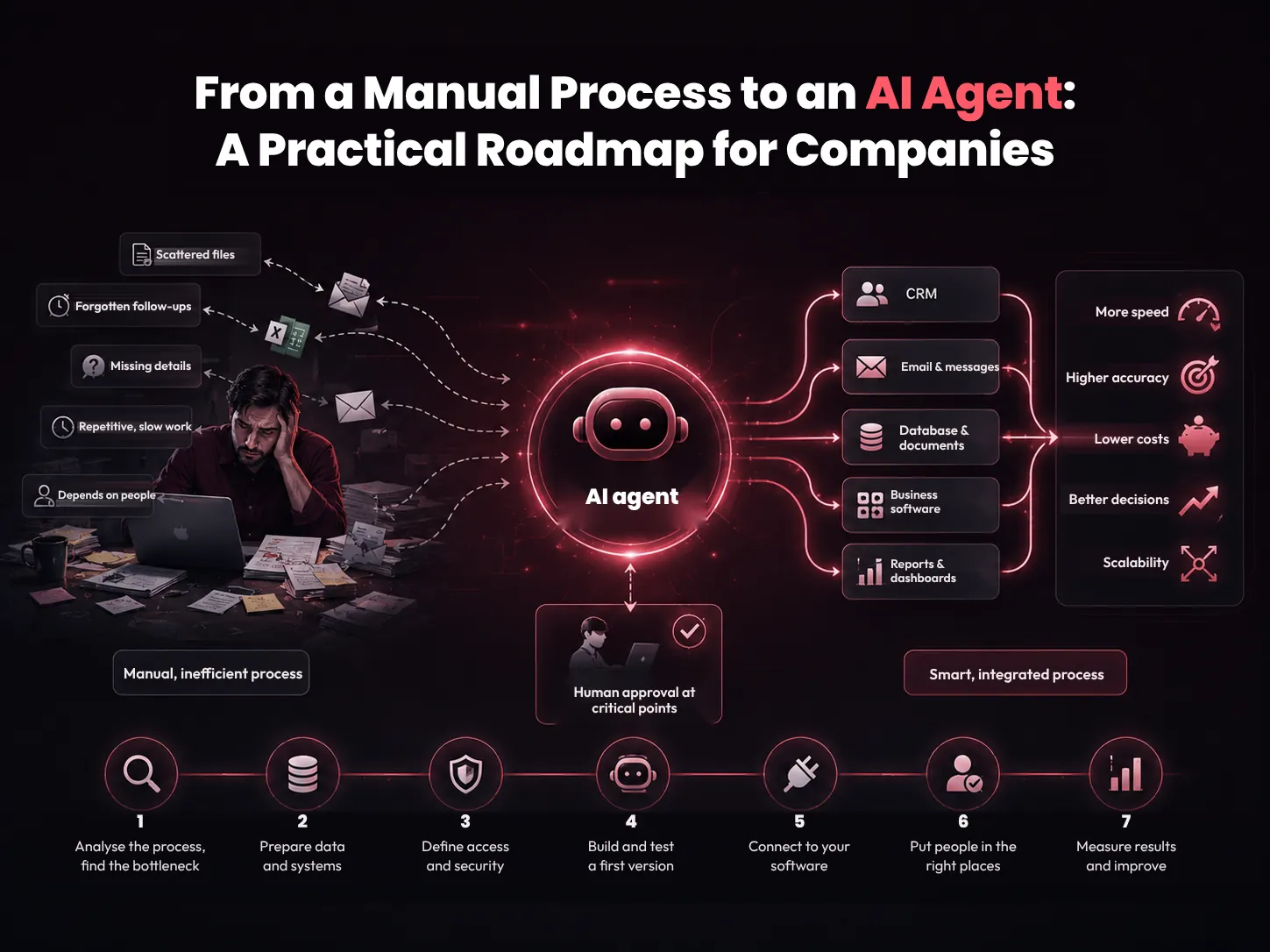
For example, the developer of the future may not simply build a CRM; they may design a system in which an AI agent analyses leads, identifies customers who need following up and suggests the appropriate next action to the sales rep.
This is where the line between "software" and "AI" gradually begins to blur.
How should businesses prepare for the new generation of software development?
The change is not just for programmers. Business leaders also need to change how they view software development.
Using AI can reduce the time needed for prototyping, developing initial features, testing and some maintenance activities, but choosing an AI tool does not on its own create a competitive advantage.
The real value is created when the organisation knows which processes are worth digitising, where automation should be applied, what data the system should have access to and where human decision-making is essential.
That is why, in new Zonan System projects, the potential use of AI can be assessed alongside the analysis of the software, architecture and business requirements — rather than AI being added to a product simply because it is fashionable.
Because the future of software development does not belong to products that merely "have AI"; it belongs to systems in which AI solves a real problem better.
Conclusion: the future of programming is not the end of coding, but a change in the programmer's role
AI will probably make a significant share of repetitive software development work faster and cheaper. Code generation, testing, documentation, debugging and prototyping will be done with AI's help more than ever, and AI agents may take on larger parts of the development process.
But AI's growing capability does not necessarily mean the end of the programmer.
A programmer whose main value is manually producing predictable code will come under more pressure. By contrast, a developer who understands architecture, analyses problems, evaluates AI output, knows about security and scalability and can connect technology to business problems will probably play a more important role.
Perhaps the best definition of the future of programming is this:
Writing code is getting easier, but building good software remains a hard problem.
For businesses, this change is also an opportunity. If you would like to explore which of your organisation's processes could be improved with custom software, automation or AI, the Zonan System team can review the problem and the feasibility of a solution with you before any development begins. Contact us to find out more.
Frequently asked questions
Will AI replace programmers?
It is more likely that AI will automate some of programmers' tasks than eliminate the programming profession altogether. Developers' roles are shifting further towards analysis, architecture, oversight and problem-solving.
Will programming disappear in the future?
Based on current trends, no. The way software is produced is changing, and using AI tools has become part of the development process.
Is it still worth learning to programme?
Yes, but focusing solely on syntax is not enough. Algorithms, problem-solving, architecture, databases, security, debugging and working with AI tools will become increasingly important.
What is the best programming language for the future?
There is no single answer. Python is very important for AI and data, and TypeScript has grown considerably in software and web development. The choice of language should be based on your field and goals.
What skills will future programmers need?
Problem-solving, software architecture, system design, security, databases, cloud, testing, debugging, working with AI and understanding business requirements will be key skills.
Can AI build a complete piece of software?
AI can generate various parts of a piece of software, but in real projects, issues such as architecture, security, requirements analysis, integration, testing and maintenance still require expert oversight.
What will programming look like with AI agents?
AI agents can go beyond suggesting a few lines of code and carry out a series of development tasks. However, agents are not yet widely used by all developers; in the 2025 Stack Overflow survey, the majority of developers were still not using agents or were sticking to simpler AI tools.
Zonan System Team
Software & AI team
Developers, designers and AI engineers at Zonan System, writing about practical AI, software development and digital business.
Need advice for your project?
Zonan System experts will guide you for free.


Comments (0)
Be the first to comment.