
What Is Project Management? Goals and Stages Explained
Project management is the process of planning, executing and controlling a project to achieve specific goals, coordinating people, budget and technology along the way.
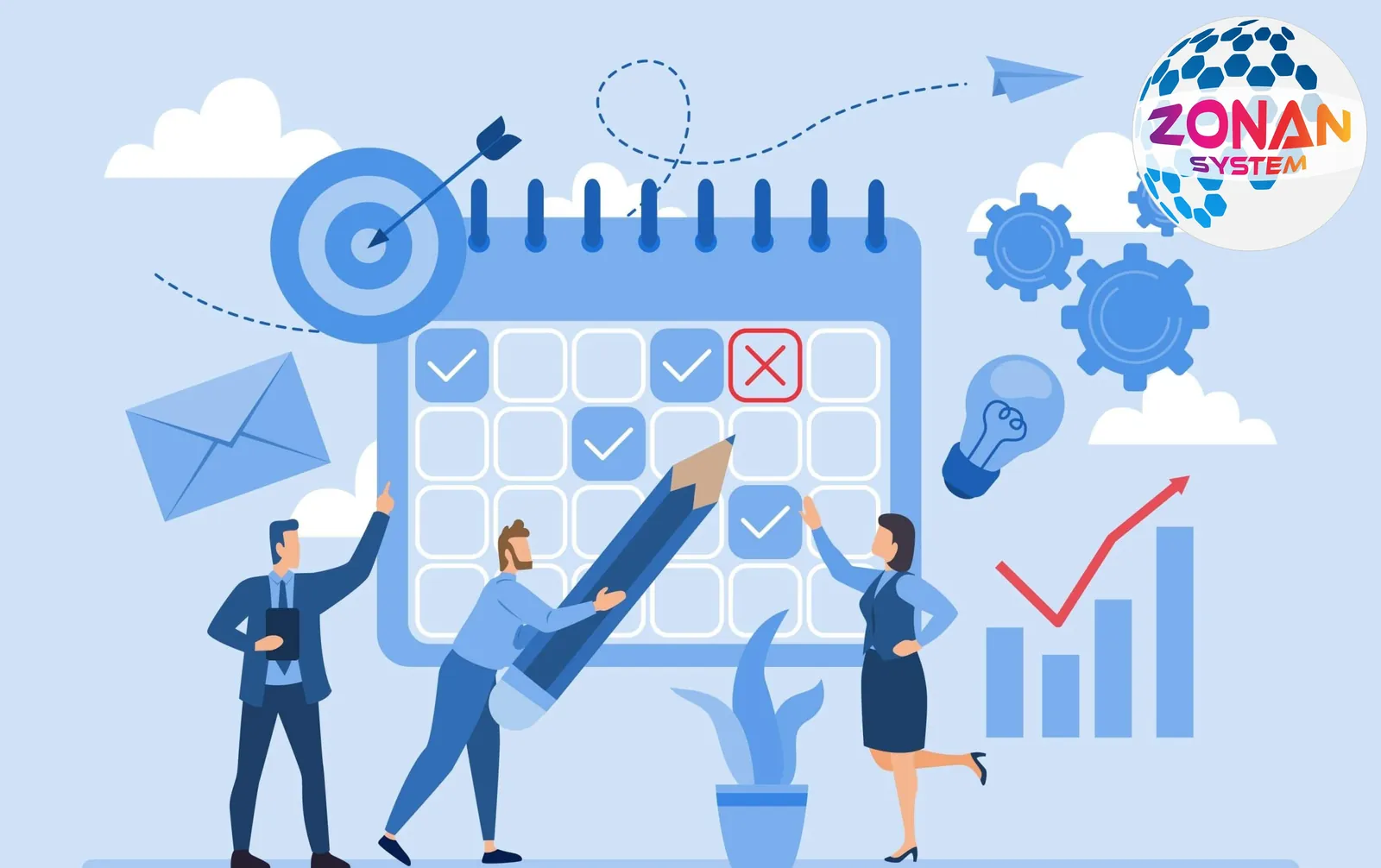
Project management is the process of planning, executing and controlling a project in order to achieve specific goals. In this process, different resources — human, financial and technical — are coordinated so that the project is completed successfully. Project management covers several stages, from setting goals and constraints to allocating resources, scheduling, monitoring progress and managing risk. The ultimate aim is for the project to finish successfully and deliver the outcomes it set out to achieve. In this article, we look at why project management matters, the role of the project manager and the key components of the project management process.
What is project management?
Project management is a process in which the goals and direction of a project are defined and then achieved using different resources, including people, money and technology. It involves planning, executing and controlling project activities so that the project is completed successfully and meets its expected goals.
Project management allows managers to optimise resources, manage the scheduling of work, identify and manage risks, and manage communication so that team members and other stakeholders are kept informed about the project.
Through project management, you can be confident that the project will be completed within the set deadline, making the best possible use of the available resources.
What is the purpose of project management?
The main purpose of project management is to achieve the project's defined goals successfully. These goals might include delivering a product, providing a service or carrying out a specific activity. Project management gives teams and managers the tools and processes they need to pursue these goals more effectively and efficiently.
Other important goals of project management include:
1. Resource management: allocating and managing financial, human and technical resources optimally to deliver the project.
2. Time management: planning and controlling the timing of activities so the project is completed on schedule.
3. Risk management: identifying, assessing and managing project risks to reduce the likelihood of problems.
4. Effective communication: continuous, effective communication with team members, customers and other stakeholders to ensure a shared understanding and a smooth workflow.
5. Progress control: monitoring and evaluating project progress and taking the right decisions to reach the goals.
Overall, the purpose of project management is to create an organised management process that helps teams take a project successfully from start to finish and achieve the expected goals.
Types of project management
Broadly speaking, project management is divided into two main categories: traditional project management and generic project management. Within each category there are various methodologies and approaches. Here are some of the types of project management:
1. Traditional project management: includes traditional methodologies such as Waterfall, which follows a linear, predetermined sequence of activities.
2. Agile: includes approaches such as Scrum, Kanban and Extreme Programming (XP), which focus on valuing human interaction, embracing continuous change and delivering added value in order to achieve the project's goals.
3. Generic project management: means using a set of project management principles and processes and combining and customising them to suit the specific needs and circumstances of a project.
4. Matrix project management: in this approach, teams are organised according to two structures at once — hierarchical and functional (the matrix).
5. Flexible project management: these models draw on a combination of different methodologies and project management principles in order to adapt to different project challenges and conditions.
Each of these approaches and methodologies has its own characteristics, advantages and disadvantages, and they may be chosen according to the type and nature of the project.
The stages of project management
Project management generally consists of several stages or phases that follow a particular order. These stages usually include:
1. Definition: at this stage, the project's goals and constraints are defined. This includes setting out the requirements, objectives and constraints, and estimating the time and cost the project will need.
2. Planning: at this stage, the plans and schedules needed to achieve the project's goals are prepared. This includes allocating resources, defining tasks and creating a comprehensive work plan.
3. Execution: this stage involves carrying out the project activities. Teams and resources start work according to the plan, and the project's product or service is produced.
4. Monitoring and control: at this stage, the project's progress is monitored and any deviation from the plan is reviewed. This includes tracking progress, managing change and resolving problems.
5. Closure and handover: at this stage, the project is completed and the final product or service is handed over to the customer or stakeholders. Activities to evaluate the project and record its lessons learned are also carried out.
These stages can be repeated continuously as a cycle, particularly in Agile or iterative projects, where feedback and improvements happen all the time.
A history of project management
The history of project management can be traced back to ancient times, but its modern form largely took shape in the twentieth century. Here is a brief overview:
1. The nineteenth century: the first project management ideas emerged in engineering and construction. Among the projects from this era remembered as examples of project management is the construction of the remarkable Eiffel Tower in Paris.
2. The twentieth century: in this period, project management became recognised as a discipline in its own right. Over the course of the century, techniques such as the Gantt chart, the Critical Path Method (CPM) and PERT (Program Evaluation and Review Technique) were introduced for planning and controlling projects.
3. The 1950s and 1960s: during this period, the use of project management techniques spread across government and military projects in the United States. This period also saw the founding of the Project Management Institute (PMI).
4. The modern era: from the 1960s onwards, project management became a science, and many different project management models were developed. These include methodologies such as Waterfall and Agile, and process-based models such as PRINCE2.
Today, project management is a vital, fundamental discipline in many industries, including IT, construction, healthcare and many more. Project management tools, techniques and approaches continue to develop and improve.
Key skills for project managers
Project managers need a broad range of skills to run projects successfully. Some of the essential skills are:
1. Communication skills: the ability to communicate effectively with team members, customers and other project stakeholders is vital.
2. Leadership skills: the ability to guide and inspire team members, manage change, resolve issues and create an effective, collaborative working environment.
3. Planning and scheduling skills: the ability to set priorities, allocate resources and prepare suitable schedules to move the project forward.
4. Risk management skills: the ability to identify, assess and manage the different risks that might affect the project.
5. Decision-making skills: the ability to carry out sound analysis and make correct, timely decisions to solve problems and meet project challenges.
6. Teamwork skills: the ability to work in a team, encourage colleagues, resolve disagreements and create a collaborative, balanced working atmosphere.
7. Technical skills: a deep understanding of the technical subjects relevant to the project and the ability to communicate with technical team members.
8. Motivation skills: the ability to encourage and motivate team members to do their best work and move the project forward successfully.
These are just a few examples of the skills project managers need to master to succeed in their profession.
What does a project manager do?
A project manager's duties generally include a set of activities and responsibilities that are essential for managing the project and achieving its goals. Below is an outline of a project manager's core duties:
1. Project planning: setting the project's goals, constraints, required resources and the schedule of activities.
2. Resource management: allocating and managing the different resources — human, financial and technical — needed to carry out project activities.
3. Communication: establishing and managing communication with team members, customers and other project stakeholders.
4. Risk management: identifying, assessing and managing the various risks that could affect the project's progress.
5. Change management: managing any changes that arise during the project and reviewing their effects on plans and resources.
6. Monitoring and controlling progress: overseeing the project's progress, making sure it is going to plan and taking corrective action when necessary.
7. Reporting and evaluation: preparing progress, financial and performance reports on the project and presenting them to managers and other stakeholders.
8. Operational management: planning and carrying out the operational activities needed to achieve the project's goals.
9. Motivation and team building: encouraging and motivating team members and creating a positive, collaborative working atmosphere.
10. Managing communications: establishing and managing internal and external communication with team members and project stakeholders.
This is only part of a project manager's role, and the exact duties of each project manager depend on the type and nature of the project.
Project planning
Project planning is a key process that project managers must pay close attention to if a project is to succeed. Here is a typical project planning process:
1. Define goals and expectations: at this stage, the project's goals are set out precisely and the expectations of customers and stakeholders are reviewed.
2. Identify resources and constraints: assess the resources the project needs — human, financial and technical — and identify constraints such as time and budget limits.
3. Form the team: select team members, define their roles and responsibilities, and make sure they have the abilities and skills needed to carry out their tasks.
4. Prepare the schedule: define the activities, allocate time to each one and draw up a complete schedule for delivering the project.
5. Identify and manage risks: identify possible risks to the project and create a plan to manage them and reduce their impact.
6. Prepare the budget: determine the costs required to deliver the project and draw up a complete budget that takes into account different costs such as staff salaries, materials and equipment.
7. Review and approve the plan: review and evaluate the plans that have been drawn up and obtain final approval from the project manager and other stakeholders.
8. Execute and monitor: carry out the planned activities and monitor the project's progress to make sure it is going to plan.
9. Adjust and update: readjust plans and schedules when needed and update them in light of changes and events that occur during the project.
This process may vary depending on the type of project and its specific circumstances, but it provides a general framework that managers can use to steer their projects.
An introduction to the PMBOK standard
The PMBOK, or Project Management Body of Knowledge, was created by the Project Management Institute (PMI) as a collection of the knowledge and skills needed to manage projects. It is generally used as an overall guide to project management and can be applied across all industries and fields.
The PMBOK standard sets out the principles, concepts and standard methods of project management, and because it comes from an official body, it is recognised as an authoritative, trusted guide to managing projects.
The PMBOK uses questions, descriptions, examples and various diagrams to explain project management concepts and methods. The standard is made up of a series of chapters covering the following areas:
1. Introduction to project management: this chapter introduces the basic concepts and principles of project management and explains why project management matters to organisations.
2. The project management environment: this chapter explains the environment and conditions in which project management takes place, including the organisation, its culture and the relevant technologies.
3. Project management processes: this chapter explains the core project management processes, such as planning, execution, control and project closure.
4. Project management process groups: this chapter explains the project management process groups and the dependencies between them.
5. Other topics: this chapter covers a range of topics related to project management, including the skills and characteristics of project managers and project management ethics.
The PMBOK standard is used as an authoritative resource for running and managing projects, and many organisations and project managers use it as their main guide.
Conclusion
- Project management is a process that covers the planning, execution, control and closure of a project with the aim of achieving specific goals and making the project a success. It requires communication, leadership, planning and risk management skills and is carried out according to various standards and methodologies. Success in project management means achieving the project's goals on time, within budget and to the desired quality, and it depends on coordination and collaboration between the team, customers and other project stakeholders.
Zonan System Team
Software & AI team
Developers, designers and AI engineers at Zonan System, writing about practical AI, software development and digital business.
Need advice for your project?
Zonan System experts will guide you for free.

Comments (0)
Be the first to comment.