
Why Is Your Sales Team Losing Leads? The Role of AI in Lead Follow-Up
Most businesses do not have a lead shortage; they have a follow-up problem. Here is why sales teams lose leads and how AI agents and automation can fix it.

Imagine this happening in your company every day…
At 10 a.m., a procurement manager lands on your website. They spend a few minutes reading about your services, fill in the consultation request form and leave their phone number. They are exactly the kind of customer your marketing team has spent months — and a good deal of money — trying to attract, through everything from Google Ads to content production and SEO.
But what happens after the form is submitted?
The notification email gets lost among dozens of others. The salesperson is in a meeting and decides to call back later. In the afternoon the workload piles up and the follow-up is pushed to tomorrow. Tomorrow, a few more urgent calls come in, and the lead slips everyone's mind.
Three days later, that same customer signs a contract with one of your competitors.
Not because they had a better product, and not because they offered a lower price — simply because they followed up faster and more consistently.
If this scenario sounds familiar, your business's real problem is probably not a shortage of leads; it is weak lead management and follow-up.
In many of the projects that Zonan System analyses when digitising sales processes, it turns out that a significant share of sales opportunities is lost not at the acquisition stage but at the follow-up stage. This is exactly where artificial intelligence can make a dramatic difference.
What problem does AI actually solve in sales?
When we talk about AI in sales, we do not just mean using ChatGPT or a chatbot.
AI in sales is a set of algorithms, machine learning models and automated systems that can analyse customer behaviour, prioritise leads, suggest the best time to follow up and even handle much of the initial communication without human involvement.
Put simply, AI does what a professional sales manager does — but far faster, without getting tired and based on data.
The real cost of a lost lead
Many managers assume that advertising is the biggest cost in sales; in practice, losing a valuable lead can cost many times more than acquiring it.
Suppose each lead costs your company around $50 to acquire. If you receive 300 leads a month, you are investing roughly $15,000 a month in marketing.
Now, if just 30 per cent of those leads are lost because of poor follow-up, thousands of dollars of your marketing budget go to waste every month with no return at all.
And the loss is not only financial. Every potential customer you lose can take with them future purchases, contract renewals, referrals and even your brand's reputation.
That is why leading companies optimise their customer follow-up process before they increase their advertising budget.
7 main reasons sales teams lose leads
1. Late contact
Speed of response is one of the most important factors in sales success. Research shows that leads followed up within the first few hours are many times more likely to convert than leads contacted a day or two later.
2. Total reliance on the salesperson's memory
Many companies still use Excel files, notebooks or messaging apps to manage customers. This may be acceptable at first, but as the number of customers grows, the chance of follow-ups being forgotten rises sharply.
3. No prioritisation
Not all leads are equally valuable.
Some are ready to buy; others are simply researching. When the sales team cannot tell the difference, it spends its time on unlikely prospects and misses the real opportunities.
4. No 360-degree view of the customer
If the salesperson does not know which pages of the website the customer has already visited, which emails they have opened or what questions they have asked, every conversation starts from scratch.
This wastes the salesperson's time and creates a poor experience for the customer.
5. No reminder system
Most sales do not happen on the first call.
Sometimes the customer needs to consult their manager, secure a budget or compare your product with competitors. Without a reminder system, many of these customers are never followed up again.
6. Not analysing the data
If you do not know how many leads entered the system, how many calls were made, how many meetings took place and how many contracts were signed, you effectively cannot improve your sales process.
7. People doing repetitive work
Sending messages, entering data, scheduling calls and updating the CRM all eat into salespeople's valuable time — even though these tasks are easy to automate.
The role of AI in lead follow-up
This is where AI comes in.
Instead of the salesperson going through the customer list every day, the system automatically identifies which customers need following up.
Instead of the sales manager asking team members for reports, a smart dashboard shows each salesperson's performance, the conversion rate, the average response time and the status of every lead.
Instead of the customer waiting hours for a reply, an AI agent can collect the initial information within the first few minutes, answer frequently asked questions and even book a demo meeting.
How do AI agents work in sales?
A sales AI agent is not just an answering bot; it is a smart assistant present at every stage of the sales funnel.
It can:
- Identify new leads.
- Extract customer information from website forms.
- Calculate a score for each lead.
- Send a welcome message.
- Suggest the best time to call.
- Arrange meetings.
- Send automatic follow-ups if the customer does not respond.
- Produce analytical reports for the sales manager.
As a result, the sales team spends its time negotiating and closing deals, not on repetitive tasks.
A real-world example
Imagine a software company that receives 50 leads a day.
Before using AI:
- Calls were made late.
- Some leads were forgotten.
- There was no accurate reporting.
- The conversion rate was 8 per cent.
After implementing an intelligent system:
- The first response was sent in under 5 minutes.
- Every lead was scored.
- Follow-ups were automated.
- The sales manager received a real-time dashboard.
- The conversion rate rose to 14 per cent.
A six-percentage-point increase may look small at first glance, but across hundreds of leads it can mean dozens of new contracts every month.
Will AI replace salespeople?
No.
One of the biggest misconceptions about AI is that it is going to replace people.
In practice, AI takes on the work salespeople usually do not enjoy, such as data entry, sending reminders, scheduling meetings and analysing data.
Negotiation, building trust, understanding the customer's feelings and closing the deal, on the other hand, still require human skill.
That is why the best results come when AI and salespeople work side by side.
Which businesses benefit most from AI?
Using AI in sales is useful for almost any organisation, but it delivers the greatest return for these businesses:
- B2B companies
- Software companies
- Digital marketing agencies
- Clinics and healthcare providers
- Insurance companies
- Financial advisers
- Industrial companies
- Training providers
- Online shops
- Service companies
Any organisation that receives a significant number of leads every day can benefit from sales automation.
How do you start implementing it?
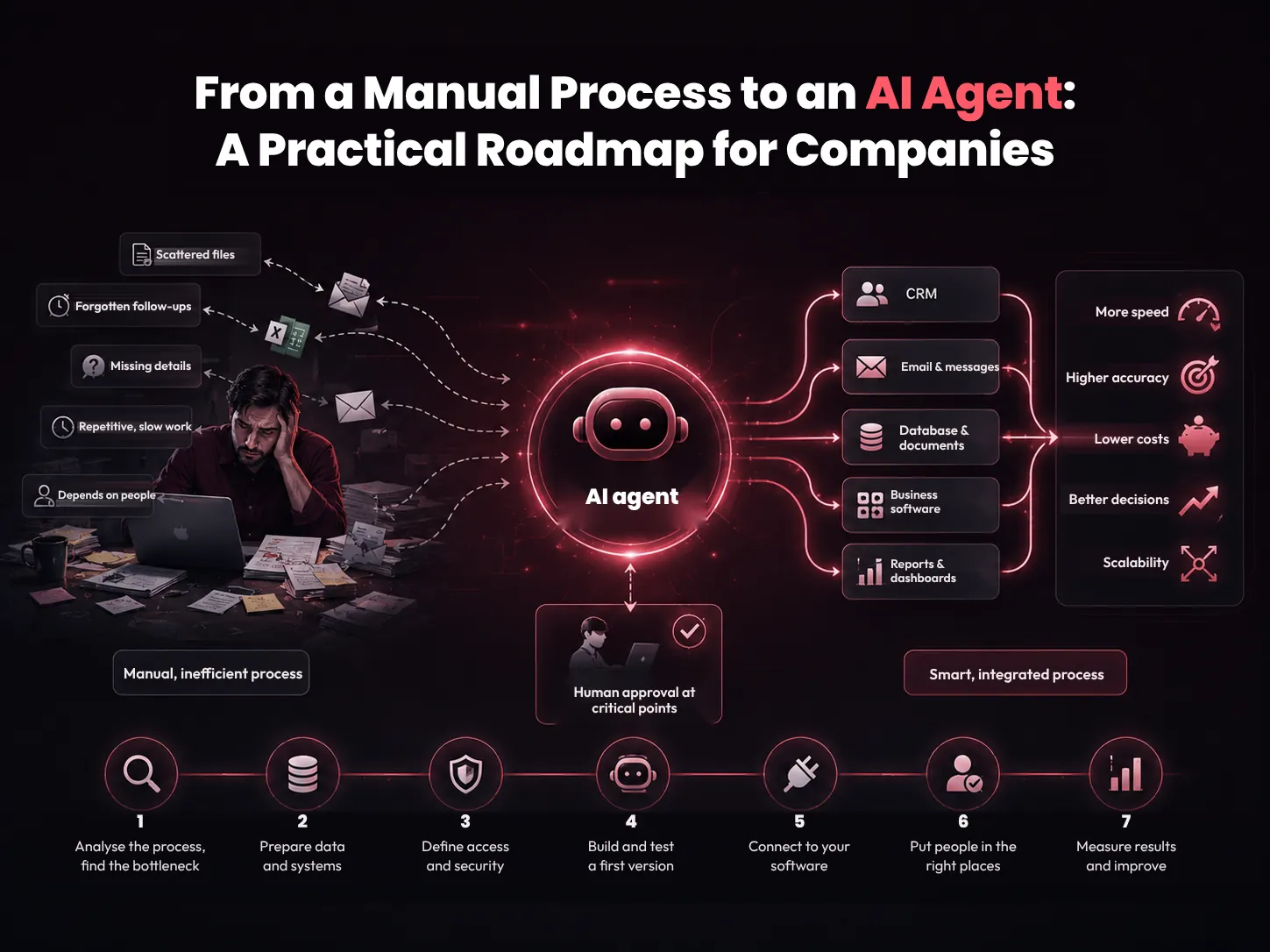
A successful AI implementation does not start with buying a tool; it starts with a clear understanding of your sales process.
The recommended steps are:
- Map out the whole sales funnel.
- Identify the points where most leads drop off.
- Integrate your CRM with your lead acquisition channels.
- Automate repetitive tasks.
- Use AI to score and prioritise leads.
- Build management dashboards to analyse performance.
- Optimise continuously based on real data.
In Zonan System's projects, this step-by-step approach helps businesses move away from scattered tools towards a single, integrated system that fits their own processes.
Conclusion
Many companies believe their sales problem is a lack of customers, when the real issue lies in managing the opportunities they already have.
AI is not here to replace salespeople; it is here to free them from repetitive work, minimise the chance of customers being forgotten and ground decisions in real data.
If your sales team is still working with Excel files, scattered notes or manual follow-ups, it may be time to redesign your sales process.
If you are planning to implement an intelligent sales system, a bespoke CRM or an AI-based solution tailored to your business, Zonan System can help. By analysing your current processes, designing bespoke software and implementing intelligent solutions, we can help you increase your lead conversion rate and minimise lost sales opportunities. Contact us to find out more.
Frequently asked questions (FAQ)
1. How does AI help improve lead follow-up?
AI reduces the chance of customers being forgotten by automating repetitive processes such as data entry, sending follow-up messages, scheduling calls and prioritising leads. By analysing behavioural data, it also helps the sales team focus on the leads most likely to convert.
2. Will AI replace the sales team?
No. AI does not replace salespeople; it works alongside them as a smart assistant. It takes on time-consuming, repetitive tasks so that sales professionals can spend more time negotiating, building trust and closing deals.
3. Which businesses benefit most from AI in sales?
Businesses that receive a large number of leads every day — such as software companies, digital marketing agencies, online shops, B2B companies, training providers and service companies — will benefit most from using AI to manage and follow up sales leads.
4. Where should you start when implementing AI in your sales process?
The first step is to review and analyse your current sales process and identify the points where most leads drop off. You can then use a CRM, sales automation and AI-based tools to make your customer follow-up process intelligent, integrated and measurable.

Zonan System Team
Software & AI team
Developers, designers and AI engineers at Zonan System, writing about practical AI, software development and digital business.
Need advice for your project?
Zonan System experts will guide you for free.


Comments (0)
Be the first to comment.